Power crunch stalls datacentre boom across EMEA and USA
Delivered capacity is falling as facilities from Santa Clara to Saudi Arabia await grid upgrades
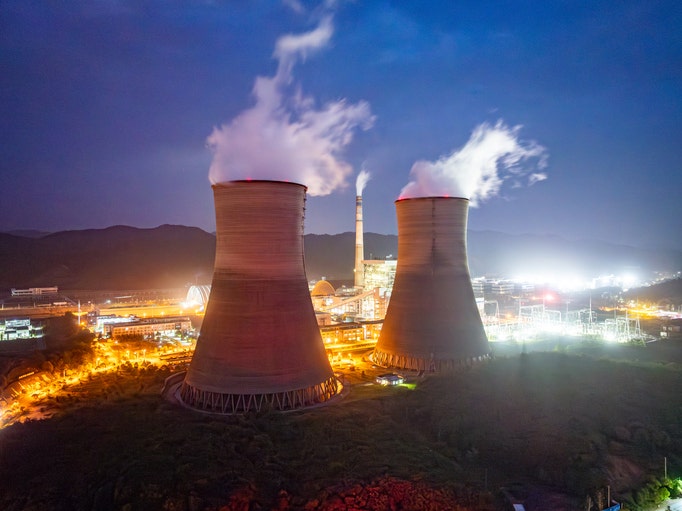
Power is the single biggest bottleneck in the global datacentre industry, with many completed facilities sitting idle for lack of electricity.
According to a new analysis from real estate services firm Savills, the amount of delivered power capacity across EMEA is down 11% year-on-year in 2025, despite relentless demand for cloud and AI infrastructure.
Only 850 megawatts (MW) of new capacity have come online in 2025 so far, while take-up reached 845MW, roughly half the amount leased in 2024.
Savills attributes the slowdown not to waning demand, but to grid constraints and a lack of new facilities entering the market.
Contracted power capacity in EMEA continues to surge, climbing to nearly 14,500MW, a 12% increase from last year.
Pre-letting, where tenants commit to capacity before construction finishes, has also jumped sharply, with about 25% of total take-up now pre-let, up from less than 20% three years ago.
As a result, occupancy rates across EMEA hit 91% in Q3 2025, up from 87% in 2022, showing how quickly operators are consuming available space.
"The persistent imbalance between surging demand and restricted supply continues to underpin rental values," said Cameron Bell, Director of EMEA Data Centre Advisory at Savills.
"Following three years of sharp increases, average rents have stabilised across the region. Nonetheless, with accelerating AI-related requirements, rising energy costs and sustained construction inflation, further upward pressure on pricing is widely anticipated for the rest of 2025 and beyond."
In Europe, established hubs remain dominant: France grew 15%, Germany 10%, and the UK and Ireland 9% this year, but new demand is spilling into non-traditional markets where land and electricity are still available.
Capacity growth surged in Portugal (60%), Saudi Arabia (49%), Spain (25%), UAE (20%) and Sweden (17%). By contrast, the Netherlands saw just 6% growth, hampered by a government-imposed moratorium on new developments.
Meanwhile, construction costs continue to climb.
Savills estimates that the total cost of constructing a datacentre - covering land acquisition, building shell, electrical and mechanical installations, cooling infrastructure, fire safety systems and full fit-out - now ranges between $7.3 million and $13.3 million per megawatt of commissioned IT load.
The steepest annual cost increases were seen in Vienna (up 28%), Warsaw (25%), Stockholm (18%) and Copenhagen (17%).
Datacentres standing empty in Santa Clara
The challenges facing EMEA mirror those in the United States, where power delivery delays are leaving state-of-the-art datacentres standing empty.
In Santa Clara, California – one of the world's most advanced tech corridors – two brand-new datacentres built for high-density AI workloads have been completed but remain unpowered.
According to a Bloomberg report, Digital Realty's SJC37 facility and Stack Infrastructure's SVY02A campus, both designed for 48MW each, are ready for servers, accelerators and networking gear, but none of it can be powered up until the local grid expands to meet demand.
Local utility Silicon Valley Power (SVP) has acknowledged the backlog, citing record demand from hyperscale operators and AI companies.
The publicly owned utility is investing $450 million in grid upgrades, including new substations and transmission lines, but those improvements won't be fully realised until 2028.
Both Digital Realty and Stack Infrastructure told Bloomberg that they are working closely with SVP to phase in power delivery in line with the utility's ongoing grid upgrade schedule.
Computing says:
It’s now obvious that AI won’t be limited by compute, but by power – throwing claims made by Sam Altman and others about tens of gigawatts of new datacentre capacity into doubt. There simply isn’t enough energy to run all of these new facilities.